Thursday, July 2, 2015

Brahman - 其限 (Sorekiri)


This is officially the first time I've gotten a Japanese CD in my hands upon release day, and it likely won't be the last, either. This showed up in the mail yesterday, straight from Amazon Japan in an atrociously mangled DHL package, but this CD thankfully survived the ordeal in immaculate condition. This is the new single from Brahman, a Japanese punk band who has been around since 1995, releasing two of my new favorite J-punk albums, A Man Of The World and A Forlorn Hope, earlier on in their career.


This single was released as an appetizer for Brahman's upcoming 2/4-disc 20th anniversary compilation album 尽未来際 (Jinmiraisai), which is currently scheduled for release on August 12th in three different editions. The most expensive of the three will contain a few extra goodies such as a photo booklet and a reproduction copy of their original demo tape in an elegant box package. However, only the A-side to this single will be featured on the upcoming compilation, so if you don't want a bunch of material you may already have, spring for this. Who knows if it'll show up on another album of more new material somewhere down the line?

As for what I thought of the little material here, I have no clue how it fits into Brahman's more recent material, since I haven't listened to their last two albums of new material yet (I have a copy of Eternal Recurrence forthcoming, but that's re-recordings of their entire pre-A Forlorn Hope era), but it fits pretty well with the softer material on A Forlorn Hope and The Middle Way. It's good to see that Toshi-Low has committed to fully Japanese lyrics now; from what I've heard out of Eternal Recurrence and recent live shows where Brahman played older material, his English vocals had deteriorated to a significant degree.


My copy of this single is the limited edition 2-discer, which includes a bonus DVD of a show from Brahman's recent "TOUR 1080°", which I haven't been able to play yet since I don't have immediate access to a Region 2-capable DVD player. However, I noticed that the two B-sides to this single were included in their set for this show, while the A-side wasn't. Not a big deal, but strange. If you're interested in keeping up with Brahman, you have no reason not to get this single, really.


The tracklisting for the CD single is as follows:

2. 終夜 ~yomosugara~
3. 汀に咲く ~migiwanisaku~

The tracklisting for the live DVD is as follows:

1. For One's Life
2. 賽の河原
3. Speculation
4. 時の鐘
5. 汀に咲く ~migiwanisaku~
6. 終夜 ~yomosugara~
7. Causation
8. 警醒
9. Answer For...
10. 霹靂
11. 虚空ヲ掴ム
12. 初期衝動


Tuesday, June 30, 2015

To Be Clips series on Laserdisc


Quick update this time. Yesterday, this complete Laserdisc set of the To Be Clips series, a collection of all of To Be Continued's music videos during their time with Sony Records, came in the mail. Only thing is, I don't have a Laserdisc player yet, nor do I have any equipment to do quality LD rips with... yet. Mark my words, you will see quality rips of these on the blog eventually!

As for what's on each of these collections, the original To Be Clips covers material from their self-titled debut and How Zit? To Be Clips 2 is exclusively material from the Bitter Sweet Love era. To Be Clips 3 covers Beyond The Light... and Day Break. I have no idea if any music videos exist for Creston Drive or Core Pop, but if they do, I sure haven't seen them.

Monday, June 29, 2015

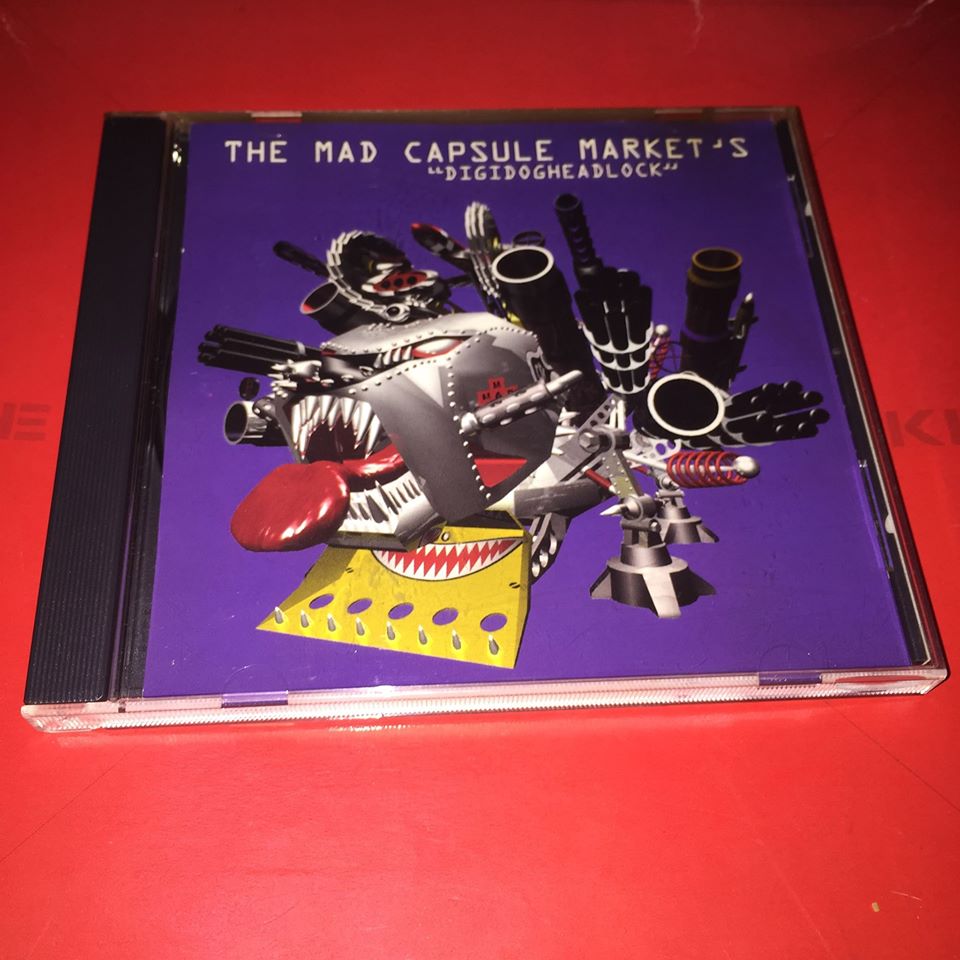
Digidogheadlock: The US Edition


HOLY SHIT I ACTUALLY FOUND IT!!!!!!

As far as Mad releases go, this seems to be a bizarre holy grail, because of the awful distribution it was put through, but here it is, after a long, long time of searching. This version of Digidogheadlock, sporting a purple cover, was released by What's Up? Music, a label created by Mad's lyric translator and manager at the time, George Cockle. Park was also released through this label, but both of these US editions are exceptionally rare due to poor distribution and public disinterest at the time. I found this copy of this ungodly rare edition on Buyee of all places at a whopping 500 yen. It's not in the best condition, but regardless, what an utter miracle!


Is there any reason to get this, beyond going for a complete collection? If you have the European yellow-cover edition from JVC (undoubtedly the most definitive edition of this album commercially available), or you have the original Japanese edition and the "Crash Pow" single, then no, absolutely not. If you don't have the album and you come across it by some chance for cheap, you might as well go for it. It only has one of the single bonus tracks, the rather meh remix of "Crash Pow", whereas the European edition has three of them. This is something that only hardcore collectors are going to see any real value in, since having all three colored covers together would look cool as hell.


The liner notes in this edition are incredibly barebones, plainly printed on the back of the front cover, but it makes them easier to read than the small print against a bright red background in the Japanese edition. Not that that really means all that much, though. Now I just need to find that yellow-cover edition, which is just slightly easier to find, and the trifecta will be complete.


Sunday, June 28, 2015

Up Hold - Intersect Of Light & Dark


Other than going after other albums with Up Hold's non-album songs, like 10 Templates or the alternate soundtrack to Beck, I've pretty much found all of Up Hold's main releases-- I'll go after the CD/VHS combo single for Sight at some point, but it isn't going to get me any material I don't already have. All this EP really offers that's in any sense new, if you already have Deepness Of Disorder, is two B-sides smack dab in the middle: "Dimension" and "Signals", which sound like they'd fit right at home in the final cut of the album anyway.


The two songs that did make it to the album aren't very different; "Emotions" is the only one with a discernable difference, and that's just that the synth outro is a little longer. They aren't the best tracks on that album, either; I intentionally waited to upload those to YouTube so I could put up the whole EP there, but if this hadn't existed, these would've been among the last tracks I'd have considered uploading. Really, only get this if you've become an Up Hold completist... the B-sides on this are alright, but the material on Fork was overall more interesting.


The tracklisting is as follows:


I assume this means they want demo tapes? I wonder how many bands sent something to them.

Friday, June 26, 2015

Shogo Hamada - The Moment Of The Moment


Along with Ai-No Sedai-No Mae-Ni, which I slightly covered yesterday, I scored Shogo Hamada's 1993 album The Moment Of The Moment. I originally did this in the vain hope that it would have the 1992 single version of "悲しみは雪のように" on there, which became his biggest single ever... alas, it didn't. However, the material that is on this album is really, really good.


Granted, at this point I haven't been able to hear Hamada's albums that preceded and succeeded this one, so I can't say for certain how much this fits into his overall discography, but it definitely sounds like a poppy J-rock album circa 1993. He gets a lot of great mileage out of this sound, although I can't help but be a little bummed at the absence of the aforementioned hit single. There's a copy of this album that comes in a neat cardboard box holding the jewel case, in the vein of its predecessors Father's Son, Wasted Tears and For Whom The Bell Tolls, but this seems to be at the absence of an obi strip. The obi version was the first thing I saw and opted for, and I'm definitely satisfied with this copy of it.


The tracklisting is as follows:

1. 境界線上のアリア
3. 最後のキス
4. 悲しみ深すぎて
9. 初秋


Thursday, June 25, 2015

My Guide To Collecting Shogo Hamada: Part I - The 1990 CD Reissues


A couple days ago, my copy of Shogo Hamada's album 愛の世代の前に (Ai-No Sedai-No Mae-Ni, aka I Was Born In 1952) came in the mail. To get my opinion of it out of the way, I'll just say this-- it's a damn rocking album. However, the focus of this post will be a potential guide to helping other collectors find the nicest releases of the J-rock legend's music.

When Hamada's album 誰がために鐘は鳴る (For Whom The Bell Tolls) was released on June 21st, 1990, CBS/Sony decided to reissue almost all of his previous albums up to that time. Many of his earlier albums, those released before CDs entered the Japanese market, seem to have been originally issued on CD on December 1st, 1985 (more on that wave later on in this post), but this wave of reissues feature what I would consider more aesthetically pleasing and consistent obi art than what I've seen of that first wave.

Many of his earlier were then remastered and reissued again in 1999, but based what I've heard from them, they seem to be victims of the loudness war, and a few of them were subject to revisionist tinkering from Hamada, most notably his double-album opus J.Boy, and to a lesser extent, this album-- its original subtitle, I Was Born In 1952, was shortened to Born In 1952, and then adopted as the album's new official title, for the 1999 remastered version. These changes have more or less scared me off from sticking my toes into that wave of reissues, and instead I'm after the 1990 versions, which as far as I know is just those earlier CDs rebranded.


Disc-wise, the albums have taken on new labels-- for example, while the original double-CD release of J.Boy has each disc's song titles written down the whole disc, accompanied by yellow stripes typical of older Sony CDs, the 1990 reissues stamp the album name and Hamada's name according to the cover's corresponding fonts, which looks nicer to me.


All of the CDs in the 1990 wave have the "CSCL-11xx" set as their catalog number, instead of the less neat jumble of numbers and letters that the 1985 wave assigned to them. Of course, there's the obvious added 1990 copyright just under this album's original 1981 copyright. Older versions of J.Boy and the albums after it included a "DR" logo on the back indicating the album in question as a "digital recording". That logo is struck from this back cover strip on these reissues.


This release date box reads as June 21st, 1990, although I'm not sure what that L symbol is supposed to indicate; any comments or private messages about what exactly it means would be highly appreciated. You may notice, however, that instead of just saying "90", the release year reads as "C". This confused me for a while until I read Sanremo Co, Ltd's article on Japanese CD release dates-- basically, when CDs were first being introduced in Japan, the recording industry decided to have the release dates written to the phrase "NIHON RECORD", with each letter corresponding to a different year. This system was phased out by 1992, apparently due to a number of reasons: they were running out of letters in that phrase, some of the letters were already repeating, and it was overall a really confusing and unintuitive system to use. The "C" is easy, since it only corresponds to one year: 1990.


Here are all of the updated catalog numbers for the CD versions of Shogo Hamada's catalog up to June 21st, 1990-- which kicks off with the reissue of Aido's sole released album from 1975. You may notice that For Whom The Bell Tolls' catalog number comes before a lot of the older albums, indicating that this wave of catalog reissues was quickly put together in order to coincide with the album's release. You may also notice that Wasted Tears abides by the older, more jumbled style of catalog numbers; I guess Sony figured it would be superfluous to reissue the previous year's album with a new catalog number so quickly.


Finally, as a bonus, here's pictures from a currently active listing for a 1985 CD issue of Hamada's album Mind Screen. The catalog number here appears to the older, jumblier "32DH..." style, but it otherwise looks identical to the 1990 version's obi. This was my sign that the master used for both of these catalog waves could be identical, but at the same time, they're actually replicating the obi on the original LP, so I don't know. I'm not allowed to attempt to bid on this auction anyway, so I couldn't grab this copy of Mind Screen to check, and I've never even seen a 1985 copy of Ai-No Sedai-No Mae-Ni, so going for that is out of the question for the moment. (I almost scored a 1990 copy of J.Boy with the obi until someone bid it out of my hands... grumble...)


According to the back cover, these CDs were issued, as mentioned before, on December 1st, 1985 (hence the "I"), but the date to the left indicates that this copy is banned from being offered in CD rental shops until March 31st, 1986. On the obi, you can see all of the albums that Hamada had released up to the time: the Aido album is absent on this original wave, and J.Boy was only nine months from being released when this CD was issued. For all I know, these actually were released to coincide with something, but I haven't been able to figure out what, if anything.

Thank you for reading this guide on determining which version of an older Shogo Hamada album you could be getting on CD. If you have any additional information on the 1990 reissues, the original 1985 issues, or even the 1999 remasters, feel free to drop some input in the comments or as an email.

Tuesday, June 23, 2015

Milli Vanilli's last single with Rob and Fab


Did you know there was a second Milli Vanilli album? If you'd read my Artist In Review article on the main bits of their discography, then you know the answer is yes. But did you know it was supposed to be an album with Rob and Fab? This is the original release single for "Keep On Running", from their intended second album of the same name, set to drop in January of 1991. It's hard to get a bead on exactly when this single was distributed, but since one of their first televised performances of the song happened days before Frank Farian's notorious press conference, it couldn't have been more than two weeks before Rob and Fab were outed.


Mind you, there isn't much noteworthy content on here. Two remixes, a radio mix only slightly shorter than the album version, and a B-side that ultimately made the album's final cut. As a strange footnote in Milli Vanilli's sketchy history, however, it's a goldmine of treasures. Look at that intended cover art for the second album! Look at how the catalog number matches the catalog number on The Moment Of Truth, the final version it was released as (under the partially-false moniker "The Real Milli Vanilli")! Just look at how it... exists! In the form that it does! It's crazy!

This single was quickly reissued with generic cover art with the artists listed as "The Real Voices Of Milli Vanilli". The contents were exactly the same, and there wasn't even any pictures of any of the "real voices" anywhere on the reissue version-- it was just reissued as such to save face. It was pretty clear that this was rushed out the door as Farian was still trying to figure out how to rebrand the material, which makes it another interesting testament to how rushed and patchwork the Milli Vanilli project was throughout its entire existence... but not interesting enough to me to make me wanna get it.


The tracklisting is as follows:

4. Keep On Running (Radio Version)

All of my media of Milli Vanilli's second album, juxtaposed at last.